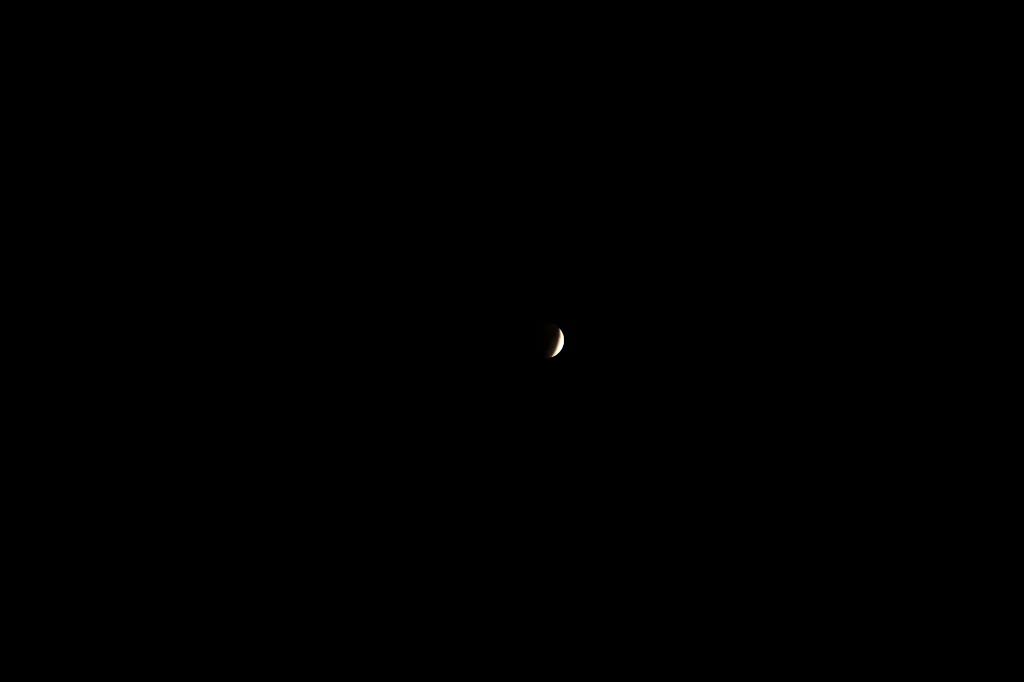
The Blood Moon: Understanding the Science Behind a Lunar Eclipse
Discover the fascinating science of the Blood Moon, why it glows red, and what makes this astronomical event so captivating.
Introduction to the Blood Moon
Few natural events capture the imagination like a Blood Moon. This dramatic celestial phenomenon occurs during a total lunar eclipse, when the Earth moves directly between the Sun and the Moon. Instead of disappearing into darkness, the Moon takes on an eerie, reddish glow—earning it the name “Blood Moon.” The event is both scientifically remarkable and culturally significant, inspiring awe throughout history.
While many people see the Blood Moon as mysterious or even ominous, modern science reveals a simple explanation. Earth’s atmosphere scatters sunlight, filtering out shorter wavelengths (blue and green) while allowing longer wavelengths (red and orange) to pass through and reflect onto the Moon’s surface. This process, called Rayleigh scattering, is the same effect that makes sunsets appear red and fiery.
If you’re fascinated by how cosmic events influence human culture and well-being, explore more resources on Arcavon’s Home page. You’ll find carefully curated insights on science, lifestyle, and mysteries that complement the themes of this article.
The Science of a Lunar Eclipse
A lunar eclipse happens when the Sun, Earth, and Moon align in such a way that Earth blocks sunlight from directly reaching the Moon. There are three main types:
- Partial Lunar Eclipse: Only a portion of the Moon passes into Earth’s shadow, creating a partial darkening.
- Penumbral Lunar Eclipse: The Moon moves through the Earth’s outer shadow (penumbra), causing a subtle dimming that can be difficult to see with the naked eye.
- Total Lunar Eclipse: The most spectacular type, when the entire Moon enters Earth’s shadow, glowing with shades of copper, orange, or red—the so-called Blood Moon.
The duration of a lunar eclipse varies, but totality can last from a few minutes to over an hour. Unlike solar eclipses, lunar eclipses are safe to observe with the naked eye, binoculars, or telescopes. This accessibility makes them one of the most widely observed cosmic events worldwide.
Why Does the Moon Turn Red?
The reddish color of a Blood Moon is due to the Earth’s atmosphere. When sunlight passes through the atmosphere, dust, clouds, and gases scatter shorter wavelengths while bending longer red wavelengths around the Earth and onto the Moon. The intensity of the red shade depends on atmospheric conditions. For example, volcanic eruptions or heavy pollution can deepen the hue into a darker red or brownish color.
This phenomenon demonstrates the interconnectedness of Earth’s systems and the cosmos. The Moon’s glow during a Blood Moon is, in fact, a reflection of Earth’s filtered sunsets and sunrises projected into space.
A Glimpse Into Historical Significance
While science provides clear explanations, ancient cultures often interpreted the Blood Moon as a powerful sign. From warnings of impending doom to symbols of renewal, lunar eclipses shaped myths and traditions across civilizations. We’ll explore these cultural and historical perspectives in the next section of this article.
Meanwhile, if you’re interested in exploring more mysteries of history and human belief systems, visit the Topics Hub on Arcavon. It offers a rich collection of insights connecting science, lifestyle, and ancient wisdom.
The Blood Moon in History and Culture
Throughout history, celestial events like the Blood Moon have inspired myths, legends, and deep cultural interpretations. Before the age of modern science, eclipses were mysterious, sometimes feared, and often considered divine messages. The striking red glow of the Moon seemed otherworldly, and ancient civilizations connected it to war, prophecy, or spiritual transformation.
For instance, in Mesopotamian traditions, a lunar eclipse was seen as a direct omen to kings and rulers. To protect their leaders, priests would sometimes appoint a temporary substitute king during the event, believing that any misfortune would be diverted. In contrast, the Incas of South America interpreted the Blood Moon as a jaguar attacking and devouring the Moon. To save it, people would shout, shake spears, and make loud noises to frighten the celestial beast away.
Religious and Spiritual Perspectives
In many religions, the Blood Moon carried symbolic meaning. In some interpretations of Christianity, references in the Bible’s Book of Joel and the Book of Revelation describe the Moon turning to blood as a sign of the “end times.” Such imagery has fueled millennia of fascination, especially during notable eclipses.
In Hindu traditions, eclipses were associated with the cosmic serpent Rahu devouring the Moon, symbolizing struggles between light and darkness. Rituals such as fasting, prayer, and bathing in sacred rivers were performed to ward off negativity and purify the soul during these rare cosmic alignments.
These spiritual interpretations, while symbolic, reflect humanity’s enduring tendency to seek meaning in the heavens. The Moon’s changing face served as a cosmic reminder of life’s impermanence, renewal, and mystery.
Folklore and Legends Across the World
In African folklore, lunar eclipses were often linked with ancestral spirits or cosmic battles. In certain Native American tribes, the Blood Moon was seen as a sign of balance—a cycle of death and rebirth. For the Chinese, a red Moon was sometimes thought to be caused by a celestial dragon consuming it, echoing their myths of dragons’ influence over the sky.
Interestingly, while many cultures viewed the Blood Moon with fear, others saw it as a sacred opportunity. For example, some indigenous groups in North America interpreted the event as a moment for reflection, renewal, and gratitude for the cycles of nature.
Modern Symbolism and Popular Culture
Today, with the advancement of astronomy, the Blood Moon is no longer feared but admired. However, its symbolic impact remains strong. In modern literature, movies, and even astrology, the Blood Moon is often portrayed as a moment of transformation, intensity, or hidden truths coming to light. Astrologers, for example, interpret it as a time of emotional release, endings, and new beginnings.
Whether viewed as science or symbolism, the Blood Moon bridges the gap between natural phenomena and human imagination. It continues to inspire photographers, writers, and dreamers who see it as a mirror of humanity’s eternal quest for meaning in the universe.
If you’re curious about more intersections between mystery, history, and science, explore the Articles section on Arcavon, where we unravel fascinating topics that connect the ancient world with modern discoveries.
The Science Behind the Blood Moon
Unlike the myths and legends of the past, today we understand the Blood Moon as a purely natural astronomical phenomenon. A lunar eclipse occurs when the Earth passes directly between the Sun and the Moon, casting its shadow across the lunar surface. During a total lunar eclipse, the Earth’s atmosphere refracts sunlight, filtering out shorter blue wavelengths and allowing longer red wavelengths to pass through. These red tones illuminate the Moon, giving it its dramatic crimson appearance (NASA).
Importantly, no two Blood Moons look exactly alike. Factors such as volcanic activity, dust levels in the atmosphere, and even pollution can affect how dark or bright the Moon appears during the eclipse. This makes every Blood Moon unique, not only scientifically but also visually.
Astronomical Importance of Lunar Eclipses
For scientists, lunar eclipses provide valuable opportunities to study Earth’s atmosphere. By analyzing the refracted light, researchers can determine the composition of particles and gases in the atmosphere, much like performing a global atmospheric test in real time. This data is crucial for climate research and for understanding atmospheric changes on our planet (NASA Earth Observatory).
Additionally, eclipses offer insight into orbital mechanics. They highlight the perfect alignment of celestial bodies and confirm long-standing astronomical calculations. Historically, ancient astronomers like the Babylonians used lunar eclipses to measure the Moon’s motion and refine calendars, showing how these events bridged science and spirituality even in antiquity.
How to Safely View and Photograph a Blood Moon
Unlike solar eclipses, lunar eclipses are completely safe to view with the naked eye. No special glasses are required, making them accessible to everyone. For the best experience:
- Find a location away from city lights to reduce light pollution.
- Check local astronomical forecasts for the exact time of the eclipse in your region (Time and Date).
- Bring binoculars or a telescope for a closer view of the Moon’s surface and color variations.
- For photography, use a tripod-mounted DSLR or mirrorless camera with a telephoto lens. Adjust ISO and exposure settings to capture the rich red tones while maintaining sharpness.
Each Blood Moon provides amateur astronomers and photographers with an opportunity to engage with the cosmos directly, fostering curiosity and connection to the wider universe.
The Blood Moon in Modern Science and Culture
While astronomers study the phenomenon with precision, the Blood Moon continues to inspire cultural fascination. Modern astrology, for example, interprets lunar eclipses as times of closure, transformation, and new beginnings. Social media platforms buzz with global excitement whenever a total lunar eclipse occurs, uniting people across continents under a shared celestial event.
From a scientific perspective, the Blood Moon also emphasizes the interconnectedness of Earth and the cosmos. The very fact that our atmosphere gives the Moon its crimson glow illustrates that life on Earth leaves its imprint far beyond our planet.
For more explorations into how cosmic mysteries shape human culture and science, visit the Topics Hub on Arcavon, where science meets history, spirituality, and lifestyle.
Conclusion: Bridging Science, Mystery, and Awe
The Blood Moon is more than just a spectacle in the night sky. It represents the intersection of science and imagination, grounding ancient fears in modern understanding while still inspiring wonder. Its fiery glow connects us to history, myth, and the cosmos itself, reminding us of both our smallness and our belonging to something vast and mysterious.
Whether you see it as a spiritual omen, a scientific marvel, or simply a breathtaking natural event, the Blood Moon invites reflection, curiosity, and unity. As you step outside to witness it, remember that countless generations before us gazed upon the same red Moon, weaving stories and searching for meaning in its glow.
For a deeper dive into mysteries like this and their ties to human culture, check out the Articles section on Arcavon.
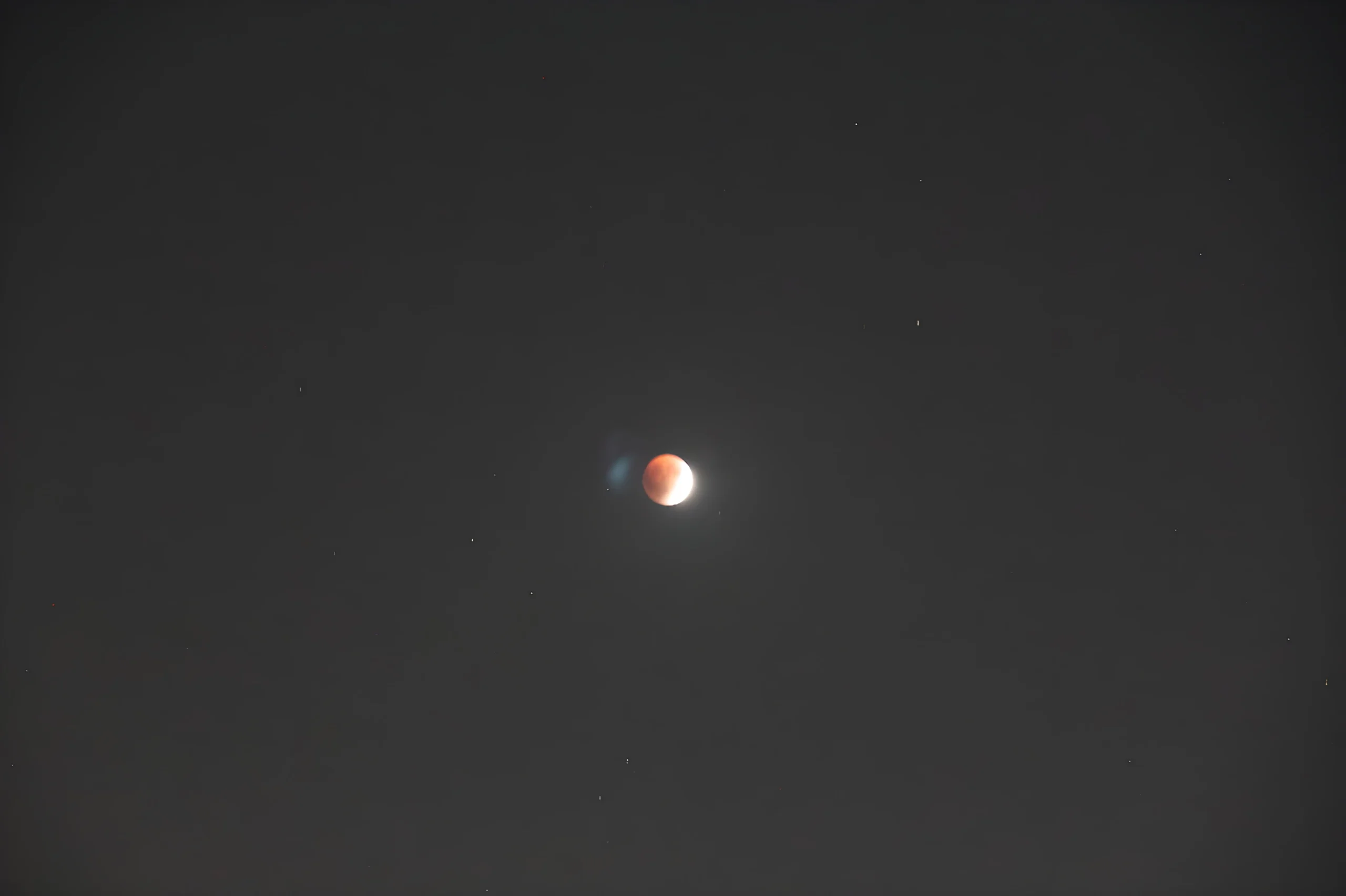
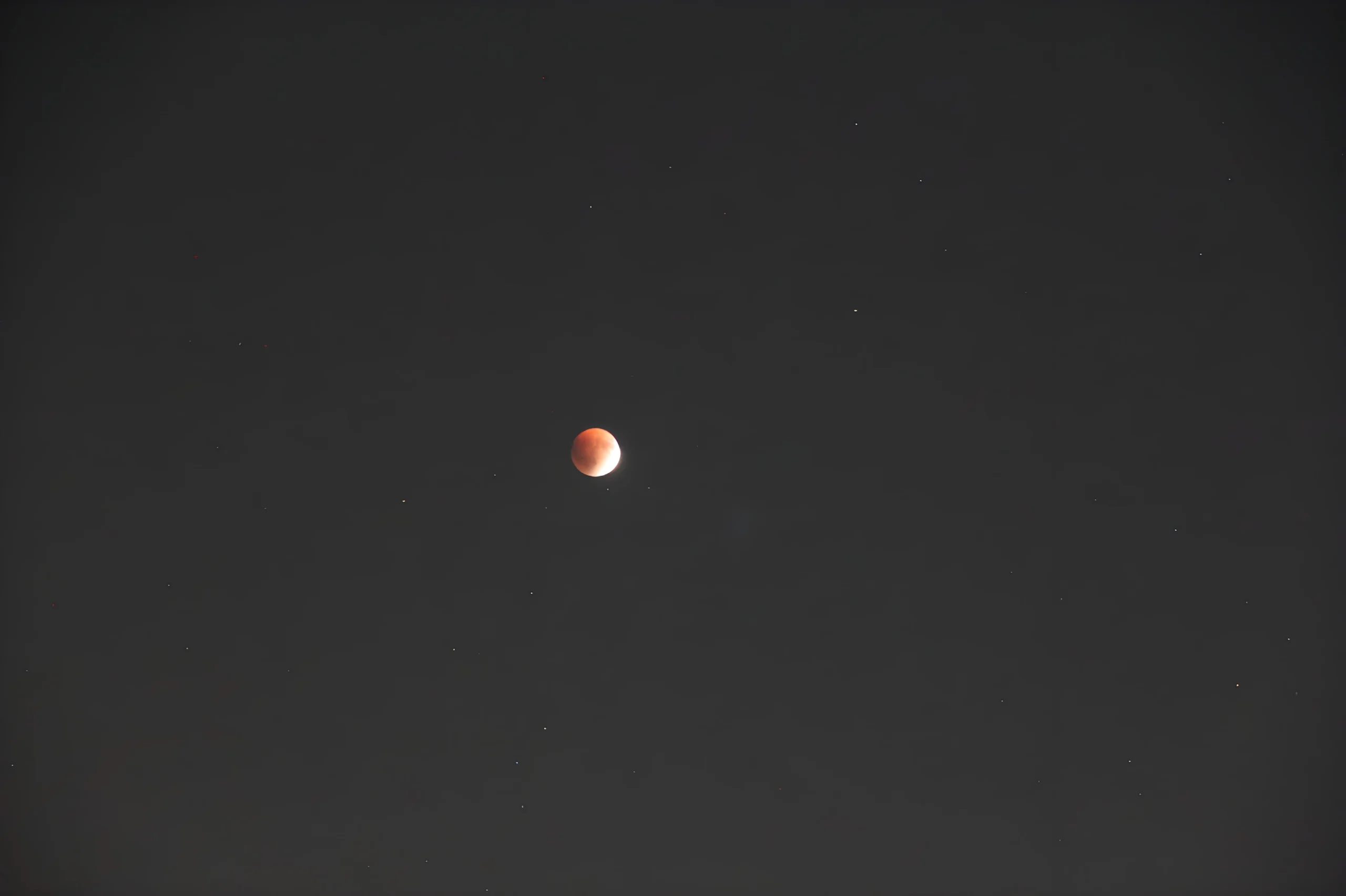
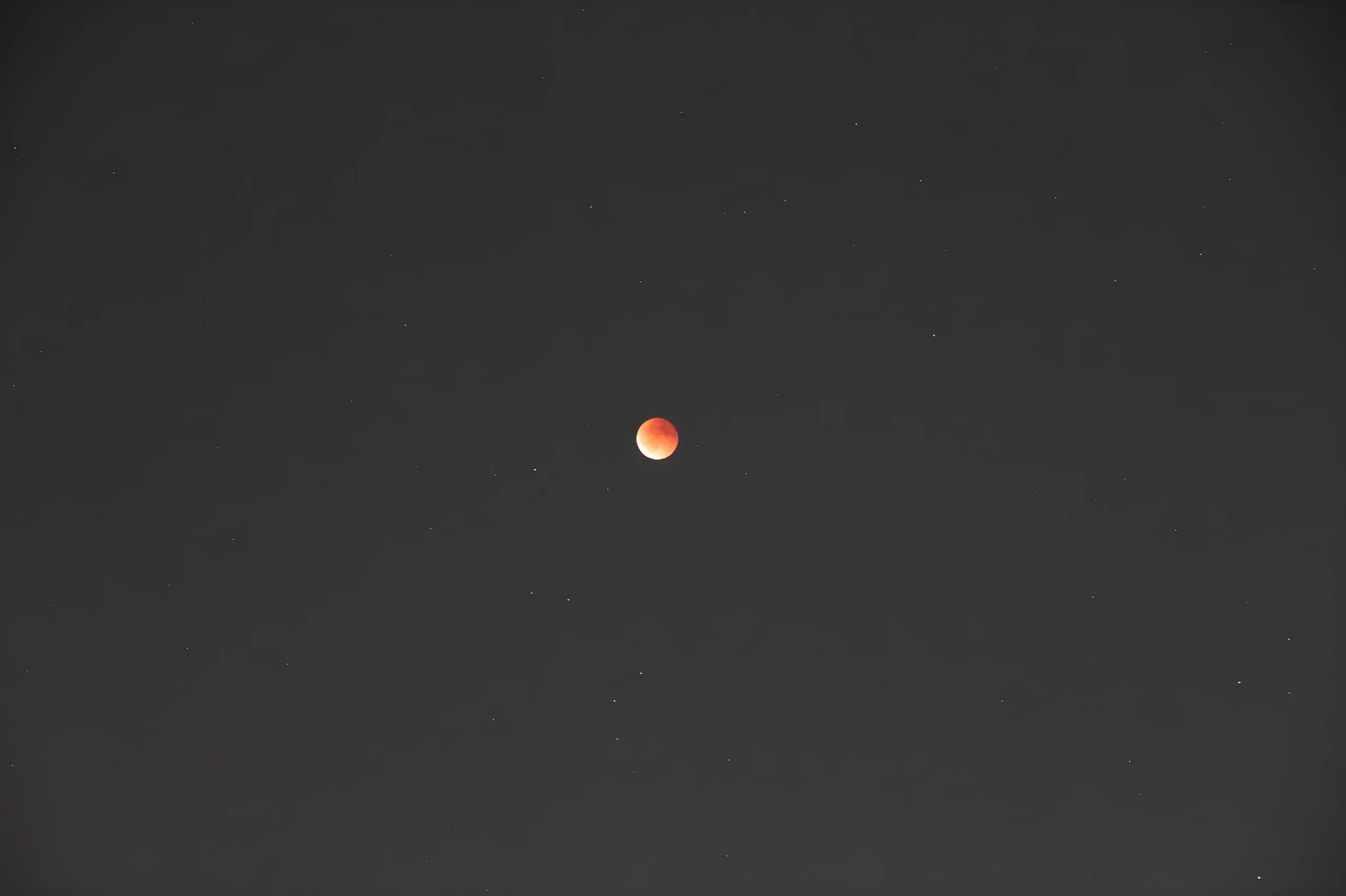
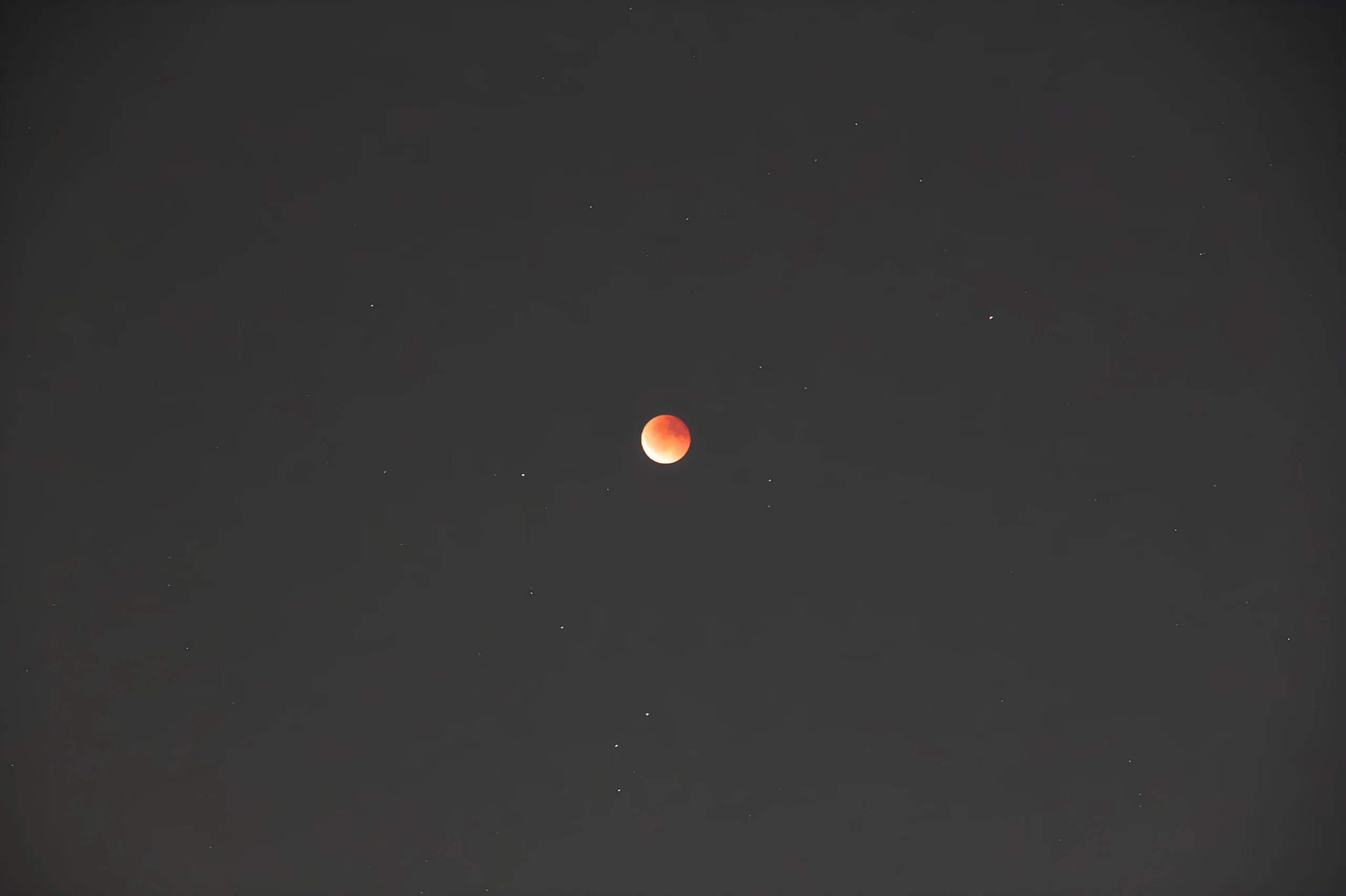
Photo Gallery: Capturing the Blood Moon Lunar Eclipse
Below are original photographs of the September 2025 Blood Moon, taken with a Canon EOS Kiss X4 and a Canon EFS 15-85mm lens from an urban rooftop.